Does Home Insurance Cover Storm Damage to a Roof in Ireland?
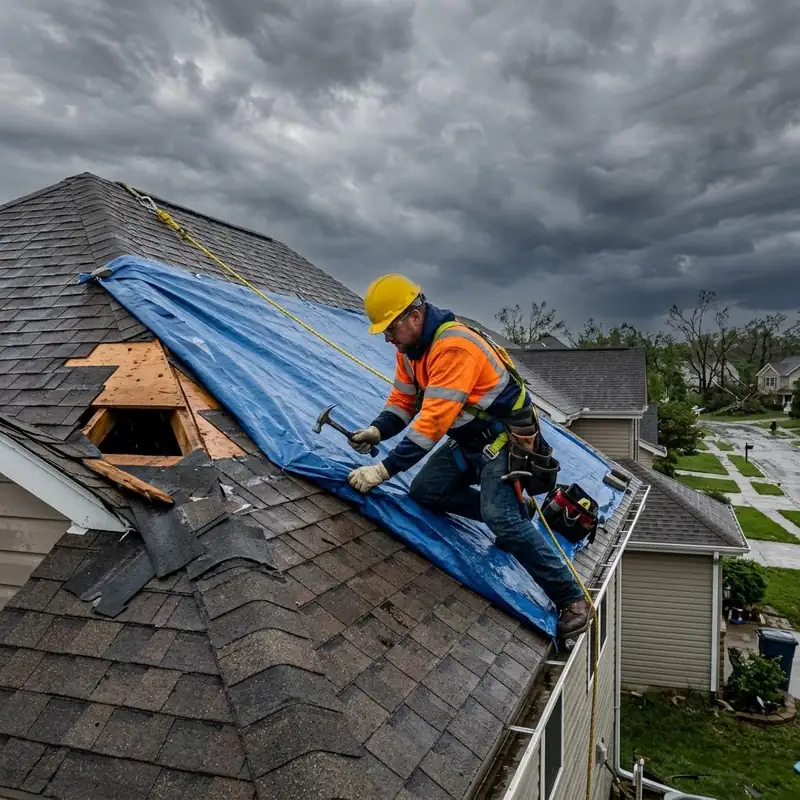
Storm damage to a roof may be covered by Irish home insurance, but no general statement can decide an individual claim. Buildings policies commonly include storm cover subject to restrictions; the policy wording, excess, reported cause and condition of the roof all matter. A leak noticed during bad weather is not by itself proof that the storm caused the damage.
This guide explains what to check and record after a storm without promising that a claim will be accepted. Put people’s safety first, notify your insurer or broker promptly, and use qualified help for roof access or temporary protection. Follow the process in your own policy and ask before assuming that an emergency cost will be reimbursed.
Storm damage is not the same as a leak found after a storm
A storm can suddenly dislodge slates, tiles, ridge materials, flashing or other roof components. However, water may also enter through an older defect, worn covering, previous repair or maintenance issue that became noticeable during heavy weather. Timing is useful evidence, but it does not establish the cause on its own. The insurer may review the policy wording and the condition of the roof before deciding how a claim is treated.
Keep observations separate from conclusions. Note when the weather occurred, when you first noticed damage or water inside, and what you could see safely from the ground. Avoid stating that a storm caused every defect unless that has been established. A professional roof inspection can describe visible conditions and likely repair scope, while the insurer decides coverage under the policy.
Your policy wording determines what is covered
Check the full policy documents, not only a summary or renewal email. Look for the buildings section, storm definition, exclusions, excess, reporting requirements, emergency-repair instructions and any limits that may apply to roof coverings or outbuildings. Policies can differ, so do not rely on a neighbour’s claim, a social-media post or another insurer’s example as a guide to your own cover.
CCPC consumer guidance says storm damage is usually covered under buildings insurance, with restrictions, and that wear and tear is not usually covered. That is general information, not a promise about a particular claim. Ask your insurer or broker how the relevant wording applies, whether it needs to inspect the roof, and whether you should obtain an estimate before permanent repairs begin.
Put safety first and prevent further damage safely
Stay away from loose roof materials, unstable walls, damaged chimneys, fallen wires and any area where debris could fall. Do not climb a ladder or go onto a roof to inspect, photograph or cover it. Keep clear of a sagging ceiling, and do not touch electrical fittings or equipment where water is present. Call the appropriate emergency service if there is immediate danger to people or the building.
From a safe indoor position, move belongings away from water if it is safe to do so and contain a drip without touching a damaged ceiling. Tell the insurer about continuing water entry and ask what immediate steps it expects. If high-level temporary protection is needed, arrange competent professional help using suitable access controls. Do not risk injury to prevent property loss.
Notify the insurer and keep a useful record
Contact your insurer or broker as soon as practical and follow the notification instructions in your policy. Ask for a claim reference and note the date, the person spoken to, any advice and the next step. Explain what happened and what you have observed without overstating the cause. If the policy requests a form, inspection or estimate, ask what information is needed and how to provide it.
When it is safe, take dated photographs or video from indoors or ground level. Record visible roof damage only from a safe position, along with internal water marks, affected belongings and the sequence of events. Keep receipts for temporary protection, accommodation or other costs and save contractor messages and written estimates. Do not delay an urgent safety response just to collect evidence, and do not discard damaged materials if the insurer asks to inspect or retain them.
Check before approving emergency and permanent repairs
A temporary measure to reduce further exposure is not necessarily the same as a permanent repair. Ask the insurer whether it wants to appoint an adjuster, inspect the damage or approve a contractor before work proceeds, and whether reasonable emergency costs may be covered. Get the response in writing where possible. If delay would leave people at risk or allow serious further damage, explain that urgency and keep a clear record of the steps taken.
Before agreeing permanent work, request a written scope that separates visible damage, suspected concealed conditions, temporary making-safe work and the lasting repair. Ask the contractor to document any additional finding before it is changed or covered. Keep estimates, invoices and photographs. A repair quotation is evidence of proposed work and cost; it is not a decision that the insurer will pay the amount.
A roof assessment and an insurance decision are different
A qualified roofer can assess roof components using appropriate access and describe damage, likely repair requirements and areas that could not be inspected. The insurer may appoint a loss adjuster to investigate its claim, while a policyholder may choose to appoint an assessor independently. Ask who each person represents and whether any independent assessor’s fee is covered; CCPC guidance notes that such fees may be at the policyholder’s cost.
For the roof condition and repair scope, arrange a storm-damage roof assessment with safe access; that assessment does not determine whether an insurer accepts a claim. Keep the technical findings, insurer correspondence and agreed repair scope together, and ask for any coverage decision or exclusion to be explained in writing. This helps you understand what has been accepted, what remains under review and which costs you may need to discuss.
For the roof condition and repair scope, arrange a storm-damage roof assessment with safe access; that assessment does not determine whether an insurer accepts a claim.
If a claim is reduced, delayed or refused
Ask the insurer to explain its decision and identify the policy wording and evidence it relied on. If you disagree, provide relevant photographs, dates, maintenance records, inspection findings or invoices and ask how to make a formal complaint. Keep copies of every document and note any deadlines the insurer gives you. The insurer’s complaint process should be followed before taking a dispute further.
If the issue remains unresolved after the insurer has had the opportunity to respond, the Financial Services and Pensions Ombudsman explains how consumers can bring an eligible complaint. Check its current eligibility and submission requirements directly. A roofer can explain construction observations, but cannot act as your insurance adviser or guarantee a claim outcome.
After storm damage: claim and safety checklist
- Keep people away from loose materials, unstable areas and electrical hazards.
- Notify your insurer or broker and save the claim reference.
- Record dates, observations and safe photographs without assuming the cause.
- Ask before arranging emergency or permanent work where circumstances allow.
- Keep itemised estimates, invoices and receipts.
- Separate the roofer’s repair findings from the insurer’s coverage decision.
Frequently Asked Questions
Does home insurance always cover storm damage to a roof?
No. Storm cover is common in buildings policies but restrictions, exclusions, excesses and the cause of damage vary. Check your own wording and ask the insurer how it applies.
Will the insurer pay for a roof leak that started during heavy rain?
Not necessarily. The timing of a leak does not by itself prove storm damage. The insurer may consider the policy wording, roof condition and evidence about how the water entered.
Should I arrange a roofer before contacting the insurer?
Notify the insurer promptly and ask about its process, including any inspection or approval requirements. If urgent safety work is needed, explain that and keep a record of the steps and costs.
Can I put a tarp on the roof to protect my claim?
No. Do not climb or work at height. Keep clear of hazards and arrange suitable professional help for temporary protection; ask the insurer how to document the work.
What if my insurer rejects the claim?
Ask for the reasons and policy wording in writing, then use the insurer’s formal complaints process. The FSPO provides information about taking eligible unresolved complaints further.
Further reading
Related Roofing Services
Official guidance
Request a Roofing Quote
Send Emerald Isle Roofers Dublin your details and a short description of the work required.
Emergency roofing: 083 158 8431